


Michael Jackson in India


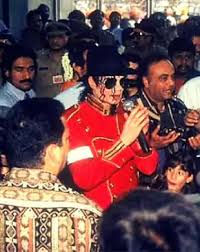


THE KING IN THE KINGDOM OF DREAMS
A Definitive Chronicle of Michael Jackson's 1996 Visit to India
Date of Visit: October 30 – November 1, 1996
Location: Mumbai (formerly Bombay), India
Event: The HIStory World Tour
Significance: The only time Michael Jackson performed in the Indian subcontinent.
THE DEAL
The most historic concert in Indian pop culture history did not begin with a handshake in a boardroom or a high-level diplomatic cable. It began with a fax message that ended up in a wastepaper basket.
In early 1996, the offices of Wizcraft International, a rising event management agency based in Mumbai, received a transmission that seemed too ridiculous to be true. The fax, sent from Los Angeles, stated simply: “Michael Jackson would like to perform in India.”
At the time, Western pop icons of Jackson's stature simply did not tour India. The infrastructure wasn't there, the ticket prices were prohibitive for the average citizen, and the logistical hurdles were legendary. Viraf Sarkari, one of Wizcraft’s founders, read the fax, laughed, and threw it away.
"We thought it was a prank," Sarkari later recalled. "We assumed it was a rival agency trying to mess with us, or just someone playing a joke. We replied saying, 'Yeah, right, we won't believe it until we hear it from Jackson himself.'"
The faxes kept coming. Finally, a direct phone call from Jackson's management team in Los Angeles changed the tone. The voice on the other end wasn't joking. The King of Pop was launching his HIStory World Tour, and he had a personal desire to visit the land of Mahatma Gandhi.
Realizing the gravity of the situation, the Wizcraft directors Sabbas Joseph, Andre Timmins, and Viraf Sarkari boarded a plane to Los Angeles. They needed to verify that this wasn't just a "maybe."
The meeting took place at a studio where Michael was rehearsing. The directors were nervous, expecting the erratic behavior often tabloid-reported about the star. Instead, they found a soft-spoken, humble artist who offered them refreshments and spoke of his fascination with Indian culture.
"He was the easiest artist to work with," Andre Timmins noted. "We presented him with a Ganesha and a Nataraj statue. He immediately recognized them without explanation, saying, 'Yes, that’s Ganesha, the god of luck.'"
The deal was real but bringing it home would require navigating a minefield of Indian bureaucracy.
Securing Michael Jackson was only 10% of the battle. The real challenge was Mumbai. In 1996, Mumbai was ruled by the Shiv Sena, a right-wing nativist political party known for its skepticism of Western cultural imperialism. For the concert to happen, Wizcraft needed political cover, someone who could guarantee police protection, road clearances, and venue permissions in a city notorious for red tape.
They found their patron in Shri. Raj Thackeray. The nephew of party founder, the legendary Shri. Balasaheb Thackeray, Shri. Raj Thackeray was young, ambitious, and looking to modernize the party’s image to appeal to the youth. He headed the Shiv Udyog Sena (Shiv Industry Army). The pitch was genius in its simplicity: The concert would not be billed as a "Western Pop Show." It would be a Charity Fundraiser.
-
The Cause: Providing employment for 270,000 jobless youth in Maharashtra.
-
The Deal: Raj Thackeray would lend the Shiv Sena's immense political machinery to the event. In exchange, the event would boost the party's profile, and the state government (ruled by the Shiv Sena-BJP alliance) would grant a crucial Entertainment Tax Exemption.
Without this tax waiver, the ticket prices would have skyrocketed, making the show financially impossible.
With the political deal signed, the technical rider arrived, and it terrified the organizers. Michael Jackson wasn't traveling light. He was bringing his own stage, his own sound system, his own lights, and his own instruments. To transport this "city within a city," Jackson’s team chartered three Antonov An-124 Ruslan aircraft. These were massive Russian military heavy-lifters, among the largest planes in the world.
When the plan was submitted to Mumbai Air Traffic Control (ATC), they flatly refused permission for the planes to land.
"They told us the planes were too heavy," Timmins recalled. "They were terrified the runway at Sahar Airport would crack under the weight of the Antonovs."
The tour was in jeopardy. The equipment was essential; without the Antonovs, there was no show. Andre Timmins had to make a frantic call to Shri. Raj Thackeray. The political machinery roared to life. Pressure was applied to the Airport Authority of India. Assurances were made. Finally, permission was granted for the Russian giants to touch down, on the condition that they clear the runway immediately.
As the date approached, Jackson's team sent another non-negotiable demand: Michael wanted to travel from the airport to the hotel in an open-roof convertible so he could wave to his fans. In 1996 India, luxury convertibles were virtually non-existent. You couldn't just rent one. Wizcraft had to scour the city for a vehicle that fit the description. They finally found one, a Toyota Crown owned by industrialist Anil Ambani. The organizers had to personally request the loan of the car from the business tycoon. Ambani agreed, and the car was sent to a workshop to be prepped for the King of Pop.
By late October 1996, the impossible negotiation was complete.
-
The Government: On board, granting a tax waiver that would later spark a 25-year legal battle.
-
The Airport: Cleared for military-grade cargo landings.
-
The Police: Mobilized to provide security equivalent to a visiting Head of State.
-
The Star: En route from Kuala Lumpur.
The fax that had been thrown in the trash had transformed into the largest logistical operation in the history of Indian entertainment. The stage was set for the arrival.
THE ARRIVAL
In Mumbai, on October 30, 1996, the sun had not yet set over the Arabian Sea, but for the thousands gathered outside Sahar International Airport, the stars were about to come out in the middle of the afternoon. Mumbai is a city that is used to crowds. It is accustomed to the frenzy of Ganesh Chaturthi and the chaotic commute of the local trains, but nothing in the city’s collective memory had prepared it for the afternoon of October 30, 1996. The King of Pop was incoming, and the city had simply stopped functioning.
For 48 hours prior to the scheduled landing, the road leading to the airport terminal had been transformed into a makeshift campsite. Fans from across the subcontinent, some arriving on trains from Kerala, others hitchhiking from Delhi had converged on this single strip of tarmac.
By 3:00 PM, the police estimated the crowd at over 5,000, though eyewitnesses suggest the number was double that. It wasn't just the ground that was occupied. In a scene that would become legendary, fans had scaled the billboards lining the highway. Scores of young men perched precariously on the branches of the Gulmohar trees outside the terminal, risking life and limb for a split-second glimpse of a man they had only ever seen on VHS tapes. "We didn't eat, we didn't drink, we just looked at the sky," said one fan who had camped out for two days. "Every plane that landed, we screamed. We didn't know which one was his."
At approximately 4:30 PM, a private jet taxied to a halt on the VIP tarmac. The air crackled with a tension that was almost physical. The stairs were lowered. The door opened. First came the security detail... massive, imposing figures scanning the perimeter. Then, the figure that defined a century of music stepped into the Indian heat. Michael Jackson looked exactly like the posters the fans were clutching. He was dressed in the full regalia of the HIStory era: a sharp, crimson military jacket adorned with gold braiding and armbands, black trousers with the signature white stripe, his black fedora pulled low, and the omnipresent aviator sunglasses shielding his eyes. A roar went up from the perimeter fence that was reportedly audible inside the terminal building.
Wizcraft and the Shiv Sena had choreographed a welcome that was designed to bridge the gap between Western stardom and Indian tradition. They didn't want a handshake; they wanted a homecoming. Waiting at the bottom of the stairs was Sonali Bendre. The young Bollywood actress had been chosen to represent the face of India. In stark contrast to Jackson's militaristic pop attire, she was dressed in a traditional Maharashtrian nine-yard Paithani sari, complete with a nathni (nose ring) and heavy gold jewelry. As Michael stepped onto the red carpet, Bendre performed a traditional Aarti, circling a lit lamp around him to ward off evil eyes and welcome the guest as a god (Atithi Devo Bhava). She then reached up and applied a Tilak... a red vermilion dot to the center of his forehead. Michael Jackson, often portrayed by the Western media as germaphobic or detached, stood completely still, lowering his head slightly to accept the blessing. He seemed genuinely fascinated by the ritual, his eyes tracking the flame of the Aarti plate.
Then came the moment that sealed his legacy in the country. Turning to the wall of photographers and the screaming fans beyond the fence, Michael Jackson did not wave or throw a peace sign. Instead, he pressed his palms together, fingers pointing upward, and bowed deeply in a traditional Indian Namaste. It was a simple gesture, but its impact was seismic. The photograph of Michael Jackson, the most famous American on earth, bowing in humility with a Tilak on his forehead was splashed across the front page of every major newspaper in India the next day. In one second, he had transitioned from a foreign invader to an honored guest.
The logistics of moving Jackson from the airport to The Oberoi Hotel in South Mumbai was a security nightmare. The route was 30 kilometers long, cutting through some of the most densely populated areas of the world. Michael had insisted on an open-roof vehicle. He refused to be hidden behind tinted glass. Wizcraft had procured a white Toyota Crown convertible, loaned by industrialist Anil Ambani, specifically for this purpose. As the motorcade inched out of the airport, the police barriers struggled to hold. The car was engulfed. Jackson stood up through the sunroof, smiling, blowing kisses, and waving.
Halfway to the hotel, the motorcade passed near Dharavi, Asia's largest slum. The streets here were lined not with the ticket-buying elite, but with the city's poorest residents, children in ragged clothes who knew Michael Jackson not for his wealth, but for his beat. Witnessing the sea of children, Michael Jackson did something that terrified his security detail: he ordered the car to stop. Disregarding the protocol, he stood fully exposed in the stationary vehicle. He began frantically waving to the children in the slums, blowing kisses with an intensity that surprised those in the car with him. "He had bags of chocolates and soft toys in the car," a Wizcraft organizer recalled. "He started throwing them into the crowd for the kids. He was looking at them, pointing at them. He wasn't performing; he was connecting." For those few minutes, the traffic of Mumbai notorious for its ruthlessness, stopped. The King of Pop was holding court with the street children of Dharavi.
By the time the motorcade reached The Oberoi at Nariman Point, the sun had set, but the camera flashes lit up the Marine Drive promenade like lightning. The hotel lobby was packed with India's elite consisting industrialists, socialites, and film stars all jostling for position. Michael was whisked through the lobby and into the elevators, taken directly to the Kohinoor Presidential Suite. As the doors of the suite closed, shutting out the roar of the millions outside, Michael Jackson’s first day in India concluded. He had been on Indian soil for less than six hours, but he had already conquered the country.
THE RESIDENCY AT OBEROI
For three days in late October 1996, the epicenter of India’s cultural universe shifted from Bollywood’s studios to a single suite on the top floor of The Oberoi Hotel at Nariman Point. While the streets outside Marine Drive were choked with thousands of screaming fans chanting his name, a very different scene was unfolding inside the hotel. The Oberoi, known for its hushed luxury and corporate clientele, had been transformed into a high-security fortress to house the most famous man on the planet.
The logistics of hosting Michael Jackson were akin to hosting a G7 summit. The hotel management, working in tandem with Jackson’s personal security detail and the Mumbai Police, essentially sealed off the hotel to the general public.
The security protocol was absolute. The elevators were reprogrammed; they would not stop at the Presidential floor without a specific, coded key card held only by the head of MJ’s security and the hotel’s General Manager. Burly bodyguards, dressed in black suits, were stationed at every stairwell, elevator bank, and corridor. Lobby staff recall the surreal atmosphere. The lobby was filled with India’s "Who's Who"... industrialists, politicians, and film stars loitering in the coffee shop for hours, hoping for a chance encounter that never came.
Michael occupied the Kohinoor Presidential Suite, the hotel's most exclusive accommodation, offering panoramic views of the Arabian Sea and the Queen's Necklace. Once the heavy doors of the suite closed, the "King of Pop" persona melted away, revealing a man brimming with almost childlike energy. Hotel guests staying on the floor directly below the Presidential Suite reported a strange phenomenon. Late into the night, they could hear rhythmic thumping and rapid footsteps vibrating through their ceiling. Michael wasn't sleeping; he was rehearsing. In the privacy of his room, wearing his pajamas, Jackson was perfecting the choreography for the upcoming concert. He was dancing on the furniture, spinning on the marble floors, and treating the suite like a private stage. The hotel management politely noted the noise but, naturally, did not ask him to stop.
One of the biggest concerns for the tour organizers was food. Michael traveled with a personal team of chefs to ensure his specific dietary needs were met and to prevent any risk of food poisoning. Typically, he stuck to a strict, bland diet while touring.
However, the aroma of Mumbai got to him. On the second day, Michael summoned the hotel’s Executive Chef. He had a simple but risky request: he wanted to eat what the locals ate. He specifically asked for "Spicy Indian Chicken" and "Naan."
The hotel kitchen went into overdrive. The chefs faced a dilemma: "Spicy" by Mumbai standards could burn the palate of an American pop star and potentially ruin his voice before the concert. They compromised by creating a bespoke version of Chicken Tikka Masala and Butter Naan. The dish was rich in flavor, heavy on cream and tomato, but extremely mild on the chili heat. When the trolley was wheeled into the suite, Michael tasted it tentatively. A few minutes later, the word came down to the kitchen: He loved it. He reportedly wiped the plate clean and requested the same meal again before he departed.
Perhaps the most enduring legend of his stay at The Oberoi involves a piece of vandalism that the hotel cherished for years. During a moment of high spirits, Michael walked up to the large, ornate mirror in the foyer of the suite. He took a stick of red lipstick (some accounts say a thick red marker) and wrote a message in large, sweeping cursive letters directly onto the glass: "I love you India, you are my special love." He signed it with his flamboyant signature. When the housekeeping staff entered the room later, they were horrified to see the "damage" to the mirror. When the management saw it, they realized it was a priceless artifact. The mirror was not cleaned. For weeks after his departure, the message remained on the glass, a tangible relic of his affection for the country.
The most poignant moment of the residency, however, was discovered only after he had checked out. Michael Jackson was known to be an insomniac, often writing poetry or thoughts late at night. On the morning of his departure, as the housekeeping staff stripped the bed in the Kohinoor Suite, they found a piece of hotel stationery resting on his pillow. It was a handwritten letter, penned in black ink, addressed to the soul of the country.
It read:
"India, all my life I have longed to see your face. I met you and your people and fell in love with you. Now my heart is filled with sorrow and despair for I have to leave, but I promise I shall return to love you and caress you again. Your kindness has overwhelmed me, your spiritual grace has moved me. Your children have truly touched my heart. They are the face of God. I truly love and adore you India. Forever, continue to love, heal and educate the children. The future shines on them. You are my special love, India. Forever, may God always bless you." He signed off with a reference that cemented his connection to the land: "Gandhi's dream is my dream."
When Michael finally left the suite to head to the airport, the staff lined up to say goodbye. Witnesses described him as incredibly shy, almost fragile, keeping his head down and whispering "Thank you" and "God bless you" to the bellboys and cleaners. He left The Oberoi having turned a corporate hotel room into a personal sanctuary. The mirror, the pillowcase, and the stories of the "dancing on the ceiling" became part of the hotel's folklore, ghost stories of the time the biggest star in the universe slept in Room 2100.
INSIDE THE WALLS OF MATOSHREE
In the cultural history of Mumbai, there have been few meetings as surreal, as politically charged, and as visually jarring as the one that took place on a humid afternoon in late October 1996.
While millions of fans knew Michael Jackson was in the city to perform, few understood that his presence was contingent on the blessing of one man. Before taking the stage at the Andheri Sports Complex, the King of Pop had to pay court to the Shri. Balasaheb Thackeray. This was not a casual celebrity meet-and-greet. It was a calculated political pilgrimage. In 1996, the Shiv Sena ruled Maharashtra, and Balasaheb Thackeray was its unquestioned patriarch. To hold a massive public event in his city without his personal endorsement was a logistical impossibility.
The motorcade that swept through the narrow, crowded lanes of Kalanagar in Bandra East was unlike anything the local residents had ever seen. Security was tighter than for a Prime Minister's visit. The destination was Matoshree, the heavily guarded fortress-residence of the Thackeray family. When the convoy halted, Michael Jackson stepped out, once again defying the tropical heat in his heavy red military jacket, black fedora, and aviator sunglasses. He was escorted inside not by record executives, but by Shri. Raj Thackeray, the young nephew of the Shiv Sena chief and the mastermind behind the entire concert.
The scene inside Matoshree was a study in contrasts. On one side sat Shri. Balasaheb Thackeray, the saffron-clad, cigar-smoking firebrand politician known for his hardline nativist politics and fierce skepticism of Western influence. On the other sat Michael Jackson, the soft-spoken, androgynous global superstar who represented the pinnacle of the American monoculture the Shiv Sena often rallied against. Yet, witnesses described the atmosphere as strangely warm.
Shri. Balasaheb, wearing his trademark dark sunglasses, greeted Michael (who was also wearing dark sunglasses). It was a meeting of two men who understood the power of a cult of personality. "Jackson is a great artist," Thackeray famously told the press later, defending his decision to host a Western icon. "His movements are like lightning. You can't dance that way; you will end up breaking your bones. We must honor art, irrespective of culture."
The Shiv Sena did not want Michael to leave empty-handed. In a ceremony captured by the flashing bulbs of the press corps, Bal Thackeray presented Michael with two traditional Indian musical instruments:
-
A Silver Tabla: A pair of Indian hand drums, intricately crafted in silver.
-
A Tanpura: A long-necked plucked string instrument used in Indian classical music.
Michael, a known collector of musical instruments, was reportedly delighted. He was seen tapping the tabla gently, asking questions about the pitch and tone. For the Shiv Sena, this was a masterful PR coup, it framed Michael Jackson not as an invader of Western culture, but as a student coming to pay homage to Indian classical arts.
Perhaps the most bizarre legacy of this meeting is a single photograph that has baffled fans and historians for nearly three decades. The image shows Michael Jackson standing awkwardly inside a bathroom, posing next to a standard Western-style toilet. For years, rumors swirled about the context of this photo. Was it a prank? A mistake? Years later, in a candid interview, Shri. Balasaheb Thackeray clarified the incident with amusing pragmatism. He explained that Michael and the entourage of children he was traveling with needed to use the restroom.
The Thackerays, being a traditional Maharashtrian family, had several Indian-style (squat) toilets in the house, which the American guests did not know how to use. They were directed to the only Western-style toilet in the residence. "One child asked, 'Where is the toilet?'" Shri Balasaheb Thackeray recalled. "After I told him, he went first. Then one by one, all the kids went. Finally, Michael Jackson went." It appears that in the chaos of the visit, with photographers and family members jostling for space, the bathroom became a temporary green room. Michael, ever the polite guest, simply posed where he was asked to pose, even if it was next to the commode.
The cultural collision extended to the press conference outside. The Indian press, unaccustomed to Jackson's soft features and heavy makeup, did not hold back. A pushy reporter, shouting over the crowd, asked Shri. Balsaheb Thackeray a stunningly blunt question: "Does Jackson look like a man or a woman?" Shri. Balasaheb Thackeray, never one to be flustered, shot back a retort that became legendary in Mumbai political circles: "He is a great artist. Whether he is a man or woman is irrelevant. He is somewhere in between, he is a phenomenon."
The visit to Matoshree served its purpose.
-
For Michael: It guaranteed him absolute safety. With Thackeray's blessing, the Shiv Sena's formidable street network transformed from potential protesters into unofficial security guards for the concert.
-
For the Shiv Sena: It softened their image. By embracing the world's biggest youth icon, the party successfully rebranded itself (briefly) as pro-youth and modern, helping Raj Thackeray launch his Shiv Udyog Sena employment initiative with massive fanfare.
As Michael’s motorcade pulled away from Bandra, clutching his silver tabla, he left behind a political landscape that had been temporarily paralyzed by his star power.
THE CONCERT
If you were within a five-mile radius of the Andheri Sports Complex tonight, you didn't need a ticket to know that history was being made. You could feel it in the ground. For one humid Friday night, the heart of Mumbai beat to the rhythm of a single man. The HIStory World Tour finally arrived, and the result was not just a concert, it was a seismic event that permanently altered the landscape of Indian live entertainment.
By 6:00 PM, the Andheri Sports Complex was a cauldron of nervous energy. The official capacity was listed at 35,000, but looking at the sea of humanity pressing against the barricades, the real number was likely closer to 50,000. The ticket prices ranging from ₹1,500 to a staggering ₹5,000 were astronomical for 1996. Yet, the stadium was packed to the rafters.
In the VIP enclosure, the hierarchy of Bollywood dissolved. Icons like Sunil Gavaskar, Asha Bhosle, Sridevi, and Anupam Kher were not acting like stars; they were acting like teenagers. "I have never seen Bollywood behave like this," noted columnist Shobhaa De, watching from the stands. "Everyone has lost their dignity. They are screaming just like the kids in the front row."
At 8:30 PM, the stadium lights died. A collective gasp, then a roar, tore through the air. A deafening, synthesized rumble shook the floorboards. On the massive Jumbotron screens, a CGI animation played: a capsule hurtling through time and space. Suddenly, a pyrotechnic explosion rocked the stage. From beneath the floor, a metallic "Space Capsule" shot upward. The door hissed open with a blast of steam. Stepping out of the smoke was Michael Jackson. Clad in a futuristic gold bodysuit (the "Teaser" outfit), he didn't sing. He didn't dance. He simply stood there. For nearly three agonizing minutes, Michael Jackson stood frozen like a statue, staring imperiously at the crowd. The silence of the performer was met with the hysteria of the audience. People were fainting in the front rows. The tension was pulled so tight it felt like a physical weight.
Then, with a violent snap of his head, he tore off his helmet. The opening chords of "Scream" shattered the air, and the statue exploded into motion.
The show was a relentless assault on the senses.
-
"They Don't Care About Us": The stage filled with dancers dressed as drill sergeants. The stomp of the beat echoed like gunfire.
-
"Smooth Criminal": This was the moment that baffled the audience. When Michael and his dancers performed the famous "45-degree Anti-Gravity Lean," a hush fell over the crowd. In a pre-internet India, many had assumed the move in the music video was a camera trick. Seeing it performed live, just meters away, felt like witchcraft.
-
"Billie Jean": The lights dimmed to a single spotlight. Michael pulled a fedora from a suitcase. As he slid backward across the stage in the Moonwalk, the stadium erupted. It was the move everyone had waited a lifetime to see.
What separated this concert from anything India had ever seen was the sheer scale of the props. During "Beat It," Michael didn't just stay on stage. He boarded a hydraulic "cherry picker" crane that extended out over the audience. He sang the rock anthem while hovering 30 feet above the heads of the fans in the Gold Class section, his hair whipping in the wind.
The climax of theatricality came during "Earth Song." A life-sized, fully operational tank rolled onto the stage. A soldier aimed a rifle at Michael, who stood defenseless in front of it, screaming the lyrics about war and planetary destruction. As the song reached its crescendo, the soldier lowered his weapon and wept. It was a piece of Broadway theater dropped into the middle of a rock concert.
The hysteria wasn't limited to the common fans. In one of the most famous anecdotes of the night, veteran actor Anupam Kher could no longer contain himself. Seeing Michael close to the edge of the stage, Kher broke protocol. He jumped the VIP barricade, pushed past a startled security guard, and managed to grab Michael’s hand. "I just wanted to touch him," Kher admitted later. "His hand was so soft. He looked at me and smiled. I felt like I had touched history." Meanwhile, backstage, India’s own dance legend Prabhu Deva often called the 'Indian Michael Jackson', stood in the wings, watching his idol with tears in his eyes.
After two hours of high-octane performance, the mood shifted. The opening notes of "Heal the World" began. Michael invited a group of Indian children onto the stage. Most were from local orphanages, dressed in simple clothes. Holding hands with them, the King of Pop walked the length of the stage. The aggression of "Threatened" and the swagger of "Smooth Criminal" were gone, replaced by the soft, messianic figure that defined his later years. As the final confetti rained down and the massive "HIStory" logo appeared on the screens, Michael bowed one last time. "I love you, India!" he screamed into the microphone. "God bless you!"
As the lights came up, 40,000 people stood in a daze. They were exhausted, sweaty, and voiceless. For Wizcraft, the "impossible negotiation" had paid off. They had pulled off the biggest event in the country's history without a single major technical glitch. For Mumbai, the hangover would last for weeks. The HIStory concert didn't just entertain; it validated. It proved that India was ready for the world stage.
Michael Jackson left the stadium immediately, whisked away in the white Toyota Crown. He would fly out of India the next day, never to return. But for those two hours in Andheri, the Kingdom of Dreams had a King.
THE AFTERMATH & CONTROVERSY
The lights at the Andheri Sports Complex had barely cooled when the euphoria of Michael Jackson’s visit began to curdle into one of the longest-running legal and political controversies in the history of Maharashtra. While the fans went home with memories of the Moonwalk, the organizers and the state government woke up to a 25-year legal headache. The HIStory World Tour in India wasn't just a concert; it became a case study in political favoritism, judicial intervention, and the definition of art itself.
The root of the controversy lay in the ticket prices. To make the concert financially viable, Wizcraft International needed to avoid the crippling Entertainment Tax, which in 1996 stood at a staggering 49% in Maharashtra. Without a waiver, nearly half of every ticket sale would go to the state, pushing ticket prices beyond the reach of the Indian public. The Shiv Sena-BJP government, led by Chief Minister Shri. Manohar Joshi (and orchestrated by Shri. Raj Thackeray), found a solution. They granted the concert a 100% Entertainment Tax Exemption. The justification they provided to the Treasury was audacious:
-
The event was for a "charitable cause" (The Shiv Udyog Sena’s youth employment program).
-
Michael Jackson was a "Classical Artist."
This second claim, that the man who grabbed his crotch during "Bad" was a classical artist on par with Pandit Ravi Shankar would become the crux of the legal battle.
The exemption did not sit well with the Mumbai Grahak Panchayat (MGP), a vigilant consumer protection body. They filed a Public Interest Litigation (PIL) in the Bombay High Court almost immediately. The MGP’s Argument:
-
Pop is Not Classical: They argued that granting a tax waiver reserved for "educational, cultural, or classical" events to a Western pop concert was a fraudulent misuse of discretionary power.
-
The "Charity" Sham: They questioned the Shiv Udyog Sena. Where was the money going? Was this a genuine charity, or was it a political slush fund for the ruling party disguised as youth employment?
The Court’s Initial Ruling: The Bombay High Court took a dim view of the government's generosity. Recognizing that the event had already taken place and the money collected, the court ordered that the profit from the concert approximately ₹3.36 Crore ($33.6 Million Rupees) be frozen. Instead of going to the Shiv Udyog Sena or Wizcraft, the money was deposited into the court registry. There it sat, gathering interest, while Michael Jackson flew back to Neverland, unaware that his performance earnings were locked in an Indian escrow account.
For the next two decades, the case gathered dust. Governments changed. The Shiv Sena lost power, regained power, and lost it again. Michael Jackson passed away in 2009. Yet, the money remained frozen. The case became a political football. Whenever the Shiv Sena was in opposition, rival parties would bring up the "Michael Jackson Case" as proof of their corruption. When in power, the Sena would attempt to revive the waiver.
The saga finally reached its conclusion in January 2021, nearly a quarter of a century after the first note of "Jam" was played. The Maharashtra Cabinet, now led by Chief Minister Shri. Uddhav Thackeray (cousin of Shri. Raj Thackeray, the original organizer), officially upheld the 1996 decision to grant the tax waiver. The Justification 2.0: The government cited the special discretionary powers under Section 6(3) of the Maharashtra Entertainments Duty Act, 1923. They argued that regardless of whether MJ was "classical" or not, the government had the right to waive taxes for events deemed to be in the "public interest." The funds now significantly grown due to interest were finally ordered to be released to Wizcraft International, closing the final chapter of the 1996 visit.
Beyond the courtroom, the cultural impact of the visit was immediate and permanent. Before 1996, India was a "flyover zone" for major Western acts. The logistics were considered too hard, the bureaucracy too thick, and the audience too poor. Michael Jackson shattered that myth.
-
Proof of Concept: He proved that Indian audiences would pay top dollar for international quality entertainment.
-
Infrastructure: The event forced Mumbai to upgrade its event management infrastructure. The "barrier systems," crowd control protocols, and ticketing systems developed for MJ became the industry standard for decades.
In the years that followed, the floodgates opened. Deep Purple, Roger Waters, Coldplay, Justin Bieber, and Ed Sheeran all eventually made their way to India. Every promoter who brought them there cites the Michael Jackson concert as the blueprint.
Perhaps the most lasting legacy, however, is not legal or commercial, but emotional. In the slums of Dharavi and the streets of Andheri, the story of the "Man in the White Car" persists. The children who caught the candy he threw are now adults in their 30s. The video footage of him waving to the slums remains a viral staple on Indian social media every year on his birthday. While the politicians fought over the money and the critics debated the definition of art, Michael Jackson’s legacy in India remained exactly what he claimed it to be in his handwritten letter: a love affair with the people.
"Gandhi's dream is my dream," he wrote. And for three days in 1996, the dream was real.